
The factory price of a stainless steel trench cover can range from approximately US$20 for a small, light-duty stamped or slotted cover to more than US$1,000 per square meter for a custom 316L heavy-duty cover with a reinforced frame, locking devices, anti-slip treatment, precision fabrication, and verified vehicle load capacity. Standard 304 stainless steel grating covers for pedestrian and general industrial drainage commonly fall within approximately US$85–220 per square meter at factory level, while comparable 316 or 316L covers are often around US$120–320 per square meter. The final price depends on the stainless grade, cover structure, width and length, plate thickness or bearing bar size, drainage opening, load requirement, surface finish, frame design, fabrication quantity, inspection documents, packing, and delivery term.
A stainless steel trench cover is not a single standardized product. The term may refer to welded bar grating, press-locked grating, perforated plate, transverse slotted plate, longitudinal slot cover, heel-resistant wedge-wire grating, embossed solid plate, recessed infill cover, or a complete framed drainage cover assembly.
These products can have similar external dimensions while containing very different amounts of stainless steel. They may also require different equipment, welding procedures, forming operations, polishing processes, reinforcement systems, locks, frames, and load testing. A price based only on cover length and width therefore provides limited information.
A practical factory pricing formula is:
Factory price = stainless steel material cost + cutting and forming + welding and assembly + surface treatment + frame and accessories + quality control + packing
Freight, insurance, customs duty, destination handling, local tax, installation, concrete work, drainage channels, and structural supports are normally separate unless the quotation specifically includes them.
| Cost Component | What It Covers | Typical Influence on Price |
|---|---|---|
| Stainless steel material | Plate, bearing bars, cross bars, frames, reinforcement, banding, and fasteners | Usually the largest part of the factory price |
| Cutting and forming | Laser cutting, shearing, punching, bending, rolling, and slot forming | Higher for complex patterns and small production batches |
| Welding | Bar connections, frame welding, reinforcement, hinges, lugs, and locks | Depends on weld length, distortion control, and finish requirements |
| Surface treatment | Grinding, brushing, polishing, pickling, passivation, or electropolishing | Can add a substantial premium to visible or hygienic products |
| Load-bearing design | Thicker plate, deeper bars, closer spacing, ribs, frames, and locking devices | One of the main reasons vehicle-rated covers cost more |
| Quality documentation | Material certificates, dimensional reports, welding records, and load tests | Moderate for standard documents and higher for third-party inspection |
| Packing | Pallets, crates, protective film, labels, and moisture protection | More noticeable on small orders and polished products |
As a general factory reference, light-duty 304 stainless steel trench covers may cost approximately US$40–150 per square meter, standard industrial grating or fabricated covers commonly cost US$85–220 per square meter, and framed light-vehicle covers may cost US$180–450 per square meter. Comparable 316 or 316L products commonly range from approximately US$120–320 per square meter for standard industrial covers and US$250–650 per square meter for framed vehicle-rated covers. Custom heavy-duty assemblies may exceed US$500–1,200 per square meter.
The price range is broad because a 100 mm wide decorative slot cover is fundamentally different from a 600 mm wide forklift-rated trench cover. The first may be manufactured from folded sheet, while the second may require deep bearing bars, a structural frame, reinforcement, locks, controlled welding, and load verification.
| Cover Type | 304 or 304L Factory Reference | 316 or 316L Factory Reference |
|---|---|---|
| Light-duty thin slotted or perforated cover | US$40–150/m² | US$60–210/m² |
| Standard welded grating trench cover | US$85–220/m² | US$120–320/m² |
| Heel-resistant or close-opening cover | US$140–350/m² | US$190–480/m² |
| Framed pedestrian or commercial cover | US$150–350/m² | US$210–500/m² |
| Light-vehicle reinforced cover | US$180–450/m² | US$250–650/m² |
| Custom heavy-duty vehicle cover | US$350–900+/m² | US$500–1,200+/m² |
| Small standard cover | Approximately US$20–120 per piece | Approximately US$30–180 per piece |
| Reinforced framed cover | Approximately US$100–600+ per piece | Approximately US$150–900+ per piece |
These figures are suitable for early budgeting rather than final purchasing. The lower end generally represents standard dimensions, regular production, light loading, simple finishes, and bulk quantities. The upper end represents thicker material, small quantities, narrow drainage openings, complicated welding, heavier loads, special frames, locking systems, polishing, passivation, inspection, or custom packing.
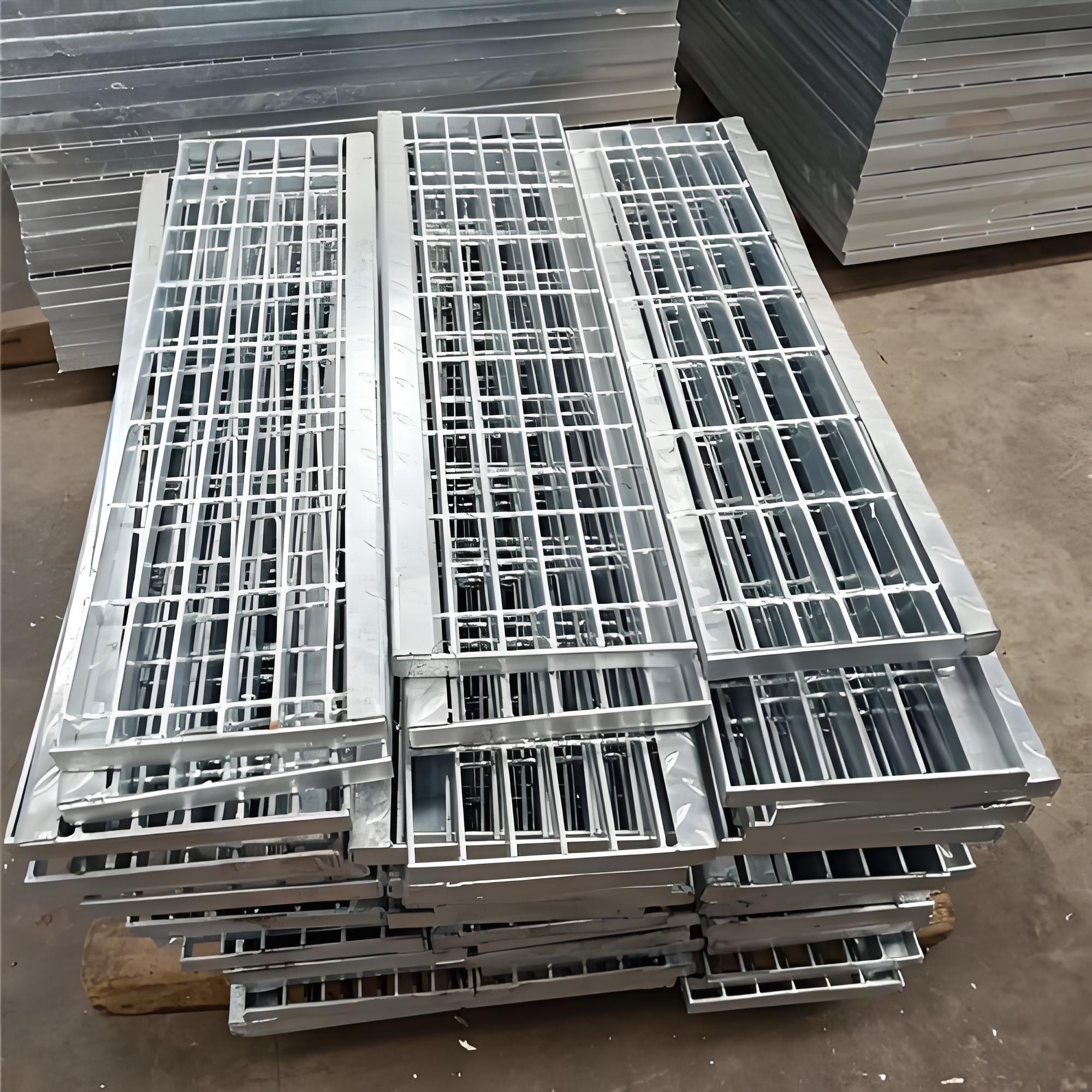
Factories may quote stainless steel trench covers per square meter, per piece, per linear meter, per kilogram, or as a complete drainage assembly. Buyers should convert all quotations to the same basis before comparing them.
Pricing per square meter is useful for wide grating panels, large trench covers, equipment-room drainage covers, and projects containing several widths. It allows the buyer to compare the material intensity of different structures.
The square-meter price must still identify the cover type. A welded grating with 30 × 3 mm bearing bars cannot be compared directly with a 5 mm solid plate or a reinforced wedge-wire cover merely because all three are priced per square meter.
Per-piece pricing is commonly used for covers with fixed widths and lengths, such as 150 × 1,000 mm, 200 × 1,000 mm, 300 × 1,000 mm, or 500 × 1,000 mm. This format is convenient when every cover is identical and includes the same edge treatment.
A per-piece offer should state whether the price includes:
• The removable cover only
• The supporting stainless steel frame
• End plates or banding
• Reinforcement bars
• Bolts, locks, hinges, or lifting keys
• Surface treatment
• Material certificates
• Packing
Linear-meter pricing is frequently used for narrow drainage channels and slot covers. It is only comparable when the clear opening, overall width, material thickness, frame design, load class, and standard section length are the same.
Weight-based pricing is useful for highly customized grating covers because it reflects material consumption. However, it may hide fabrication differences. A cover with many short welds, curved cuts, openings, polishing requirements, and locks can have a much higher processing cost per kilogram than a simple rectangular panel.
| Quotation Unit | Best Used For | Main Risk When Comparing |
|---|---|---|
| Per square meter | Grating panels and wide trench covers | Different thicknesses, bearing bars, and load capacities may be hidden |
| Per piece | Repeated standard cover sizes | Frames and locks may be excluded |
| Per linear meter | Narrow slot drains and fixed-width channels | Different cover widths may appear to have similar prices |
| Per kilogram | Custom fabricated stainless products | Complex processing cost may not be visible |
| Complete system | Channel, frame, cover, outlets, and accessories | Difficult to separate cover cost from the drainage body |
A cover measuring 300 × 1,000 mm has an area of 0.30 square meter. If the basic cover price is US$150 per square meter, the area-based value is:
0.30 m² × US$150/m² = US$45 per piece
If the cover also requires welded banding, a supporting frame, two locking devices, brushed finishing, and export packing, the final piece price may become US$70–110 or more.
This example illustrates why multiplying area by an advertised square-meter price does not always produce the final factory quotation.
The selected stainless steel grade affects both purchase price and expected corrosion performance. The correct decision should be based on the drainage environment rather than appearance alone.
Type 304 is one of the most widely used stainless steels for trench covers. It is commonly selected for commercial kitchens, indoor factories, food-processing areas, public buildings, swimming-pool surroundings without severe chloride exposure, architectural drainage, and general outdoor applications.
Its wide availability usually makes it the lowest-cost option among the four grades discussed here. It provides good general corrosion resistance but may suffer pitting or crevice corrosion where chlorides, salt deposits, aggressive cleaners, or continuously wet crevices are present.
304L is the low-carbon version of 304. Its lower carbon content reduces the risk of chromium carbide precipitation in heat-affected areas during welding. This can be useful for fabricated covers containing long welds, welded frames, closed corners, reinforcement, or other joints that will not receive a full solution heat treatment after fabrication.
The price difference between 304 and 304L is often small. In some markets, dual-certified 304/304L material is commonly stocked, which can make the price nearly identical. A premium may still apply when a specific certificate, thickness, finish, or heat is required.
Type 316 contains molybdenum, which improves resistance to pitting and localized corrosion in many chloride-containing environments. It is commonly considered for coastal projects, marine facilities, chemical plants, pharmaceutical facilities, wastewater plants, and drainage systems exposed to more aggressive cleaning chemicals.
Because of its additional alloy content and market availability, 316 normally costs more than 304. The actual premium changes with nickel, chromium, molybdenum, mill supply, product form, and order quantity.
316L combines the molybdenum-containing corrosion performance of the 316 family with lower carbon content for welded fabrication. It is frequently specified for hygienic drainage, chemical processing, coastal environments, and fabricated assemblies where weld quality and post-weld corrosion resistance are important.
316L is normally the most expensive of the four common options. However, the difference between 316 and 316L may be limited when dual-certified 316/316L material is readily available.
| Grade | Relative Material Price | Main Reason for Selection | Typical Trench Cover Application |
|---|---|---|---|
| 304 | Lowest baseline | General corrosion resistance and wide availability | Indoor commercial, food, architectural, and general industrial drainage |
| 304L | Similar to or slightly above 304 | Lower carbon content for welded fabrication | Welded 304-grade covers and frames |
| 316 | Higher than 304 | Improved resistance in many chloride environments | Coastal, marine, chemical, and wastewater applications |
| 316L | Usually highest | Chloride resistance combined with low-carbon weldability | Hygienic, chemical, coastal, and heavily welded assemblies |
316L should not be treated as universally corrosion-proof. Warm chlorides, stagnant salt deposits, strong acids, certain cleaning chemicals, crevices, and continuously wet conditions can still damage standard austenitic stainless steel. More highly alloyed or duplex grades may be necessary in severe environments.
Grating covers are made from parallel bearing bars connected by cross bars. They provide high open area, rapid drainage, ventilation, and good structural efficiency.
The main cost factors are bearing bar depth, bar thickness, bearing bar spacing, cross-bar spacing, manufacturing method, banding, serration, frame design, and stainless grade.
Standard welded grating is often one of the most economical structures for medium and wide industrial trenches. Close-mesh, press-locked, heel-resistant, or polished grating costs more because it uses more material or requires more processing.
Perforated covers are manufactured from stainless sheet or plate with round, square, elongated, or decorative holes. They provide smaller openings than conventional bar grating and can be suitable for pedestrian, bicycle, wheelchair, food-processing, and architectural applications.
The price depends on plate thickness, hole size, open area, punching or laser-cutting time, edge bending, reinforcement, and finish. A thin perforated cover can be economical, while a thick vehicle-rated perforated cover may require substantial reinforcement and become more expensive than standard grating.
Slotted covers use longitudinal or transverse openings cut or punched into a formed plate. Narrow slot systems provide a clean architectural appearance and can reduce the visible width of the drain.
The factory cost is influenced by slot width, number of slots, cutting length, plate thickness, folded depth, reinforcement, frame, and surface finish. Very narrow repeated slots increase laser-cutting or punching time and may require additional distortion control.
Solid covers are selected where drainage through the cover is not required or where the trench is used for cables, services, inspection access, or containment. They may be made from plain plate, chequered plate, embossed plate, or plate with an applied anti-slip surface.
Solid covers contain more metal than open grating of similar area. They may therefore have a higher material cost, especially when thick stainless plate is required. Solid surfaces can also collect water unless the surrounding floor is graded correctly.
| Cover Structure | Relative Factory Cost | Drainage Performance | Common Use |
|---|---|---|---|
| Standard bar grating | Low to medium | High open area | Industrial drainage and equipment areas |
| Close-mesh grating | Medium to high | Good, with smaller openings | Pedestrian, small-wheel, and heel-resistant areas |
| Perforated plate | Medium | Depends on perforation ratio | Commercial, hygienic, and public areas |
| Slotted plate | Medium to high | Controlled linear intake | Architectural and linear drainage |
| Solid plate | Medium to high | No direct drainage through the cover | Cable trenches and inspection covers |
| Recessed infill cover | High | Usually limited to side or slot intake | Architectural paving and concealed access |
| Wedge-wire cover | High | High with narrow openings | Hygienic and heel-resistant drainage |
Material weight is one of the clearest indicators of factory price. Increasing plate thickness or bearing bar size adds stainless steel directly to every square meter of cover.
The approximate weight of one square meter of stainless steel plate can be calculated using a density of about 7,930 kg per cubic meter:
Approximate plate weight in kg/m² = thickness in mm × 7.93
| Plate Thickness | Approximate Stainless Steel Weight | Typical Application |
|---|---|---|
| 1.5 mm | 11.9 kg/m² | Light decorative or formed covers with support |
| 2.0 mm | 15.9 kg/m² | Light-duty folded and perforated covers |
| 3.0 mm | 23.8 kg/m² | Commercial pedestrian covers with suitable reinforcement |
| 4.0 mm | 31.7 kg/m² | Stronger pedestrian or light commercial applications |
| 5.0 mm | 39.7 kg/m² | Reinforced or moderate-load covers |
| 6.0 mm | 47.6 kg/m² | Heavy fabricated covers and short-span vehicle applications |
| 8.0 mm | 63.4 kg/m² | Heavy plate covers subject to engineering verification |
A 5 mm plate contains approximately two and a half times as much stainless steel as a 2 mm plate. Its final price will not be exactly two and a half times higher because cutting, forming, welding, and finishing costs do not increase in the same proportion, but the material increase remains substantial.
For grating covers, bearing bars carry the load between trench supports. Common sizes include 20 × 3, 25 × 3, 25 × 5, 30 × 3, 30 × 5, 40 × 5, 50 × 5, and 60 × 5 mm.
The approximate bearing bar weight, excluding cross bars and banding, can be estimated as:
Bearing bar weight in kg/m² = bar depth × bar thickness × 7.93 ÷ bearing bar spacing
| Bearing Bar Size | Spacing | Approximate Bearing Bar Weight Only | Relative Price Position |
|---|---|---|---|
| 20 × 3 mm | 30 mm | 15.9 kg/m² | Light and economical |
| 25 × 3 mm | 30 mm | 19.8 kg/m² | Light pedestrian range |
| 30 × 3 mm | 30 mm | 23.8 kg/m² | Common industrial range |
| 30 × 5 mm | 30 mm | 39.7 kg/m² | Higher load and higher cost |
| 40 × 5 mm | 30 mm | 52.9 kg/m² | Heavy industrial range |
| 50 × 5 mm | 30 mm | 66.1 kg/m² | Heavy and expensive |
| 30 × 3 mm | 40 mm | 17.8 kg/m² | Lower weight than 30 mm spacing |
The completed panel weighs more after cross bars, end banding, reinforcement, locks, and frames are added. The table nevertheless shows why two covers with the same external size can have very different prices.
Increasing the clear trench width usually increases the unsupported span. A wider cover may require deeper bearing bars, thicker plate, folded side sections, reinforcement ribs, intermediate supports, or a stronger frame.
The price therefore does not always increase in direct proportion to width. Changing from a 200 mm trench to a 400 mm trench may require a completely different structural section rather than simply twice the material.
Closer bearing bar spacing places more load-carrying bars within each square meter. It increases material weight, welding points, and production time while reducing the clear opening.
A grating with bearing bars at 30 mm centers generally contains about one-third more bearing bars than a comparable panel with 40 mm centers. The exact finished-price difference depends on cross bars, frames, and fabrication.
Reducing cross-bar spacing from 100 mm to 50 mm doubles the number of cross-bar rows. This can improve opening control and lateral restraint but also increases material and welding requirements.
A higher open area can improve water intake, but it may not be suitable for high heels, small wheels, bicycles, walking aids, food-processing tools, or locations where objects could fall through the cover.
A lower open area may require a wider channel or more drainage length to handle the same water flow. Hydraulic capacity should therefore be checked together with pedestrian safety and structural loading.
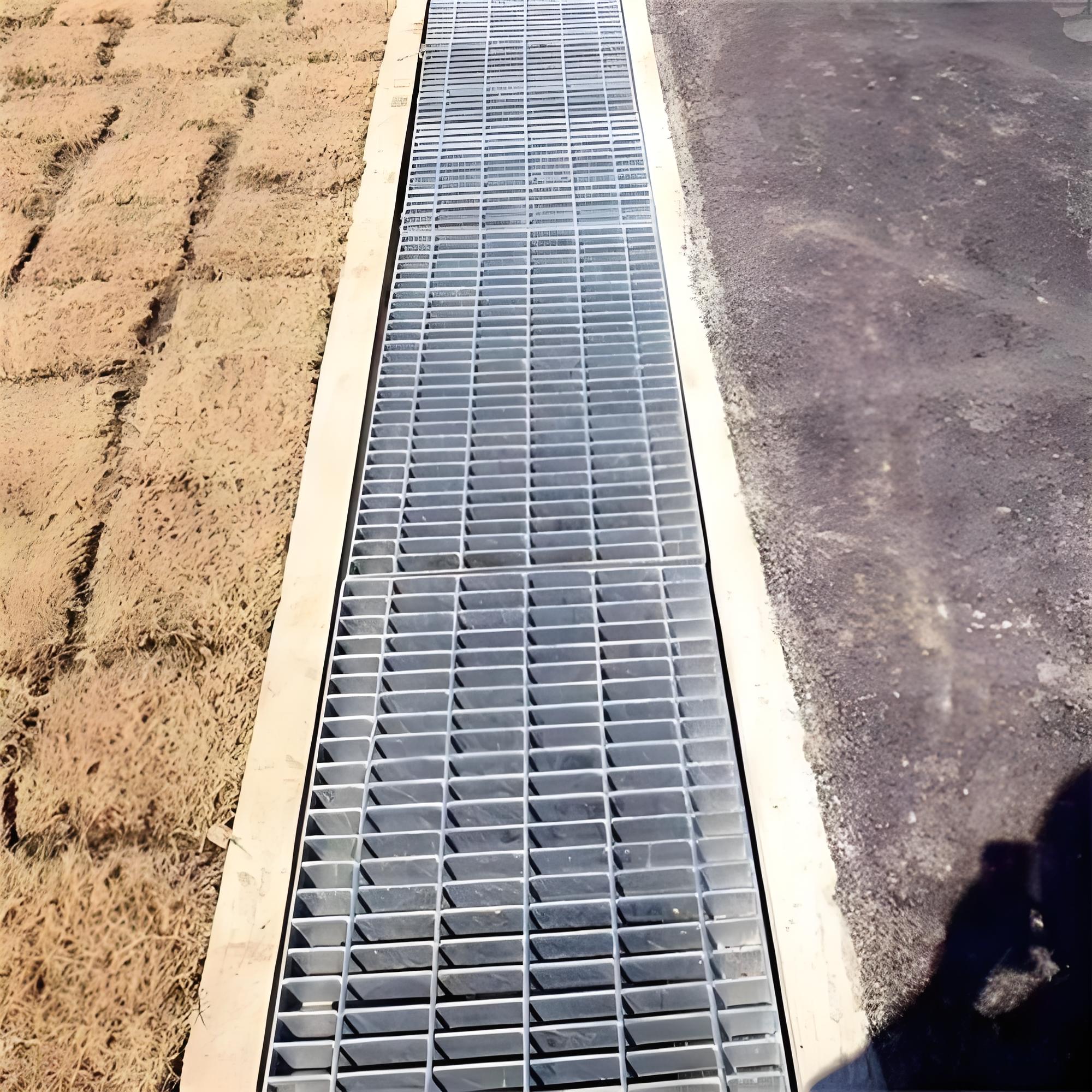
Heel-resistant covers use narrow openings intended to reduce the risk of narrow footwear entering the grate. The term “heel-proof” is used differently by manufacturers and is not a substitute for a stated opening dimension or applicable project standard.
Narrow openings generally increase price because they require one or more of the following:
• More bearing bars
• More cross bars
• Narrower laser-cut slots
• Wedge-wire construction
• Additional reinforcement
• More welding or pressing operations
• Tighter dimensional tolerances
| Opening Design | Material and Processing Requirement | Relative Price |
|---|---|---|
| Standard open grating | Fewer bars and large drainage openings | Lowest |
| Close-mesh grating | More bearing bars or cross bars | Moderately higher |
| Perforated plate | Punching or laser cutting with moderate opening ratio | Medium |
| Narrow slotted plate | Long precision cuts and possible reinforcement | Medium to high |
| Heel-resistant wedge wire | Closely spaced profiles and extensive welding | High |
| Decorative custom pattern | Programming, slow cutting, and finishing | High |
Buyers should provide the maximum permitted clear opening rather than requesting only “heel-proof” or “ADA-style” grating. The applicable accessibility, bicycle, public-space, or local building requirements should be confirmed for the installation location.
Load requirement is one of the largest price drivers. Higher loads require more stainless steel, stronger frames, closer supports, reinforced connections, secure locking, and sometimes physical load testing.
Pedestrian covers are used on walkways, commercial floors, kitchens, changing rooms, public areas, patios, and process floors. They may use perforated sheet, slotted plate, shallow grating, or wedge wire.
Light-duty pedestrian covers represent the lower end of the stainless steel price range. However, public areas, narrow heels, wheelchairs, trolleys, cleaning machines, and carts may require a stronger or closer-opening design than ordinary foot traffic.
Driveways, parking areas, workshops, warehouses, loading areas, and vehicle wash bays may be exposed to passenger cars, vans, or light commercial vehicles.
A light-vehicle cover normally requires thicker plate or deeper bearing bars, a structural frame, reliable bearing at both sides, and a locking or retaining system. Dynamic wheel movement, braking, turning, impact, and tire contact area should be considered.
Factories, distribution centers, ports, airports, loading docks, industrial yards, and logistics facilities may be exposed to forklifts, trucks, container-handling equipment, or other concentrated wheel loads.
These applications may require deep bearing bars, heavy frames, welded reinforcement, closely spaced structural members, bolted locks, engineered concrete support, and testing of the complete drainage assembly.
| General Loading Category | Typical Area | Likely Cover Structure | Relative Price |
|---|---|---|---|
| Pedestrian only | Walkways, kitchens, patios, and public floors | Perforated, slotted, light grating, or wedge wire | Low to medium |
| Commercial pedestrian and trolley | Food plants, retail areas, and factories | Reinforced plate or close-mesh grating | Medium |
| Passenger vehicle | Driveways and parking areas | Reinforced cover with structural frame | Medium to high |
| Light commercial vehicle | Workshops, loading areas, and service yards | Heavy grating or reinforced plate with locks | High |
| Forklift or truck | Factories, distribution centers, and industrial yards | Engineered heavy-duty cover and frame assembly | Very high |
| Port or airport equipment | Docks, terminals, and aircraft pavements | Special engineered drainage system | Project-specific |
European drainage projects commonly refer to load classes such as A15, B125, C250, D400, E600, and F900. Higher class numbers represent progressively more demanding test loads and applications.
A15 is generally associated with pedestrian and cyclist areas. B125 is commonly associated with sidewalks, pedestrian zones, and certain light-vehicle areas. C250 is used in more demanding kerbside or commercial conditions, while D400 is associated with road-vehicle areas and other heavy traffic locations.
The required class should be selected according to the exact installation location and applicable standard. A driveway near frequent delivery traffic may need a higher class than a domestic walkway, even when vehicles only cross the drain occasionally.
A trench cover should not be described as D400 or another certified class merely because its plate is thick. Performance depends on the cover, frame, channel body, lock, bearing surface, surrounding concrete, installation detail, and test arrangement.
When a certified load class is required, the buyer should ask for documentation covering the complete proposed system. A calculation or load test for an isolated cover may still be useful, but it is not automatically equivalent to certification of the installed drainage assembly.
Mill-finish stainless steel is normally the lowest-cost surface. It may show rolling marks, minor scratches, heat tint, handling marks, or differences between plate batches. This finish may be acceptable for concealed cable trenches or basic industrial applications.
Brushed or satin finishing creates a more uniform directional appearance. It is widely used for architectural, commercial kitchen, food-processing, and public-area covers.
The cost depends on the required grit, number of visible surfaces, weld blending, edge treatment, and whether the finish must match surrounding stainless steel equipment.
Polishing requires progressively finer abrasives and more labor. A high visual finish becomes particularly expensive on covers with many welds, corners, slots, or internal surfaces.
Mirror polishing is rarely necessary for industrial trench covers and can make some walking surfaces more slippery unless the design includes a separate anti-slip profile.
Raised dots, ribs, chequered patterns, or stamped textures can improve surface engagement. The cost depends on tooling, plate thickness, production quantity, and whether the pattern is formed before or after fabrication.
Serrated stainless steel grating uses bearing bars with toothed upper edges. It normally costs more than plain grating because of the additional serration process and the need to control the effective structural section.
Abrasive strips, inserts, or bonded anti-slip materials may be added to stair edges or solid covers. Their long-term suitability depends on chemical exposure, cleaning, temperature, wear, and adhesion.
Pickling removes welding heat tint, oxide scale, and certain surface contaminants. It is particularly useful for fabricated stainless steel products exposed to corrosive or hygienic environments.
The cost depends on panel size, treatment method, chemical handling, rinsing, wastewater management, and the amount of welding discoloration.
Passivation removes free iron contamination and supports the formation of a clean chromium-rich passive surface. It may be specified after fabrication, grinding, or pickling.
Passivation should not be confused with electropolishing and does not remove heavy scale or deep scratches by itself.
Electropolishing removes a controlled microscopic layer from the surface and can produce a smoother, cleaner finish. It is used for selected pharmaceutical, food, hygienic, and high-corrosion applications.
It is generally one of the more expensive finishing options and may be unnecessary for ordinary outdoor trench covers.
| Surface Treatment | Relative Added Cost | Main Purpose |
|---|---|---|
| Mill finish | Lowest | Basic industrial use |
| Brushed or satin finish | Low to moderate | Uniform appearance and easier visual integration |
| Weld grinding and blending | Moderate | Remove sharp or visible weld irregularities |
| Serrated or embossed anti-slip surface | Moderate | Improve surface engagement |
| Pickling | Moderate | Remove oxide and welding heat tint |
| Passivation | Moderate | Remove free iron and restore a clean passive surface |
| High polishing | High | Architectural or hygienic appearance |
| Electropolishing | High | Special hygiene, cleanability, or corrosion requirements |
Standard rectangular covers can be nested efficiently on plate or produced from repeated grating panels. Curved covers, angled ends, pipe openings, irregular corners, and numerous unique panel sizes increase programming, cutting, handling, and inspection time.
Laser cutting provides accurate openings and clean patterns but can be expensive when the design contains many narrow slots or long cutting paths. Waterjet cutting may be selected for certain thick or heat-sensitive components, although it is generally slower.
Bar grating covers normally require banding at cut bearing bar ends. Trim banding closes and protects the edge, while load-carrying banding may transfer load around an opening or unsupported boundary.
Load-carrying banding requires stronger welds and more engineering consideration than ordinary trim banding. A quotation should state which type is included.
Weld cost is influenced by total weld length, joint preparation, filler metal, welding process, access, distortion control, grinding, inspection, and surface restoration.
Long continuous welds can distort thin stainless plate. The factory may need fixtures, balanced welding sequences, intermittent weld patterns, straightening, or thicker material to maintain flatness.
A frame provides a stable bearing edge, protects the trench corner, controls the finished opening, and allows the cover to sit flush with the surrounding floor.
Frames may be manufactured from angle, folded plate, channel, rectangular tube, or specially formed profiles. Their price depends on material size, anchors, leveling devices, weld length, corners, and overall straightness.
Locks prevent accidental movement, unauthorized access, vibration, theft, and uplift. Common systems include bolts, captive screws, spring locks, toggle locks, concealed locks, and keyed mechanisms.
A basic bolt adds little cost, but a concealed stainless locking system with removable keys, captive hardware, and precise alignment can add a noticeable amount to every cover.
Large or heavy solid covers may require hinges, stays, handles, lifting keys, or gas-assisted opening systems. These accessories increase fabrication cost but may reduce manual handling risks during maintenance.
| Custom Feature | Typical Price Effect | Main Cost Driver |
|---|---|---|
| Straight rectangular cutting | Low | Cutting time and material nesting |
| Curved or irregular shape | Moderate to high | Programming, scrap, and manual fitting |
| Trim banding | Low to moderate | Edge length and number of panels |
| Load-carrying banding | Moderate | Heavier bar and stronger welds |
| Stainless angle frame | Moderate to high | Material, welding, anchors, and straightness |
| Simple bolted lock | Low | Fastener and threaded component |
| Concealed locking system | Moderate to high | Precision parts and installation alignment |
| Hinge and lifting system | High | Hardware, reinforcement, and assembly |
A stable factory price should reflect not only raw material but also manufacturing control. Stainless steel covers may look simple, but poor flatness, weak welds, incorrect bearing direction, sharp edges, contaminated surfaces, or undersized frames can cause installation and service problems.
The factory should confirm the stainless grade against the purchase order and material certificate. When grade mix-up presents a serious risk, positive material identification may be specified.
Material certificates should identify the heat number, grade, dimensions, chemical composition, and applicable material standard where required.
Plate covers should be checked for overall dimensions, slot position, hole diameter, bend angle, folded depth, and edge condition. Grating covers require verification of bearing bar size, spacing, cross-bar spacing, banding, and bearing direction.
Weld procedures should be suitable for the selected stainless steel grade and section thickness. Excessive heat input can increase distortion and produce heavy heat tint. Insufficient welding can leave weak frames, loose bars, or incomplete joints.
Visible welds may require grinding and blending, while hygienic products may need smoother transitions that do not trap residue.
A cover that rocks inside its frame can create noise, impact, wear, and a trip hazard. The factory should check diagonal dimensions, frame squareness, cover-to-frame clearance, surface level, and contact at bearing points.
Laser-cut slots, punched holes, plate edges, banding, and welds should be inspected for burrs and sharp projections. Edge finishing is especially important where covers are removed manually for cleaning.
Stainless steel can be contaminated by carbon steel grinding dust, wire brushes, worktables, lifting chains, and storage racks. Dedicated or properly cleaned tools should be used when surface corrosion performance is important.
After chemical treatment, covers should be rinsed and inspected for remaining heat tint, staining, chemical residue, and inconsistent appearance.
Load capacity may be established through engineering calculations, manufacturer load tables, physical testing, or certification of the full drainage system. The appropriate method depends on the project and claimed load class.
| Quality Check | What Should Be Verified |
|---|---|
| Material grade | 304, 304L, 316, 316L, or specified alternative |
| Material dimensions | Plate thickness, bearing bar size, frame size, and reinforcement |
| Cover dimensions | Length, width, depth, opening size, and diagonal measurement |
| Grating arrangement | Bearing direction, spacing, cross bars, and banding |
| Weld quality | Continuity, penetration where required, spatter, cracks, and distortion |
| Surface condition | Finish, scratches, heat tint, contamination, and chemical residue |
| Frame fit | Clearance, rocking, flushness, and lock alignment |
| Drainage openings | Slot width, hole size, open area, and blockage |
| Load performance | Applicable load table, calculation, test, or certification |
| Identification | Panel marks, grade marks, load information, and drawing references |
Quantity affects the unit price because many manufacturing expenses are fixed or semi-fixed. Drawing review, programming, machine setup, welding fixtures, polishing preparation, inspection documents, and packing design must be completed even for a small order.
One or two custom covers may have a high unit price because material must be purchased, drawings prepared, cutting programmed, and equipment set up for a very small quantity.
A sample price should not automatically be multiplied by the final project quantity. Repetitive production normally reduces processing cost per piece.
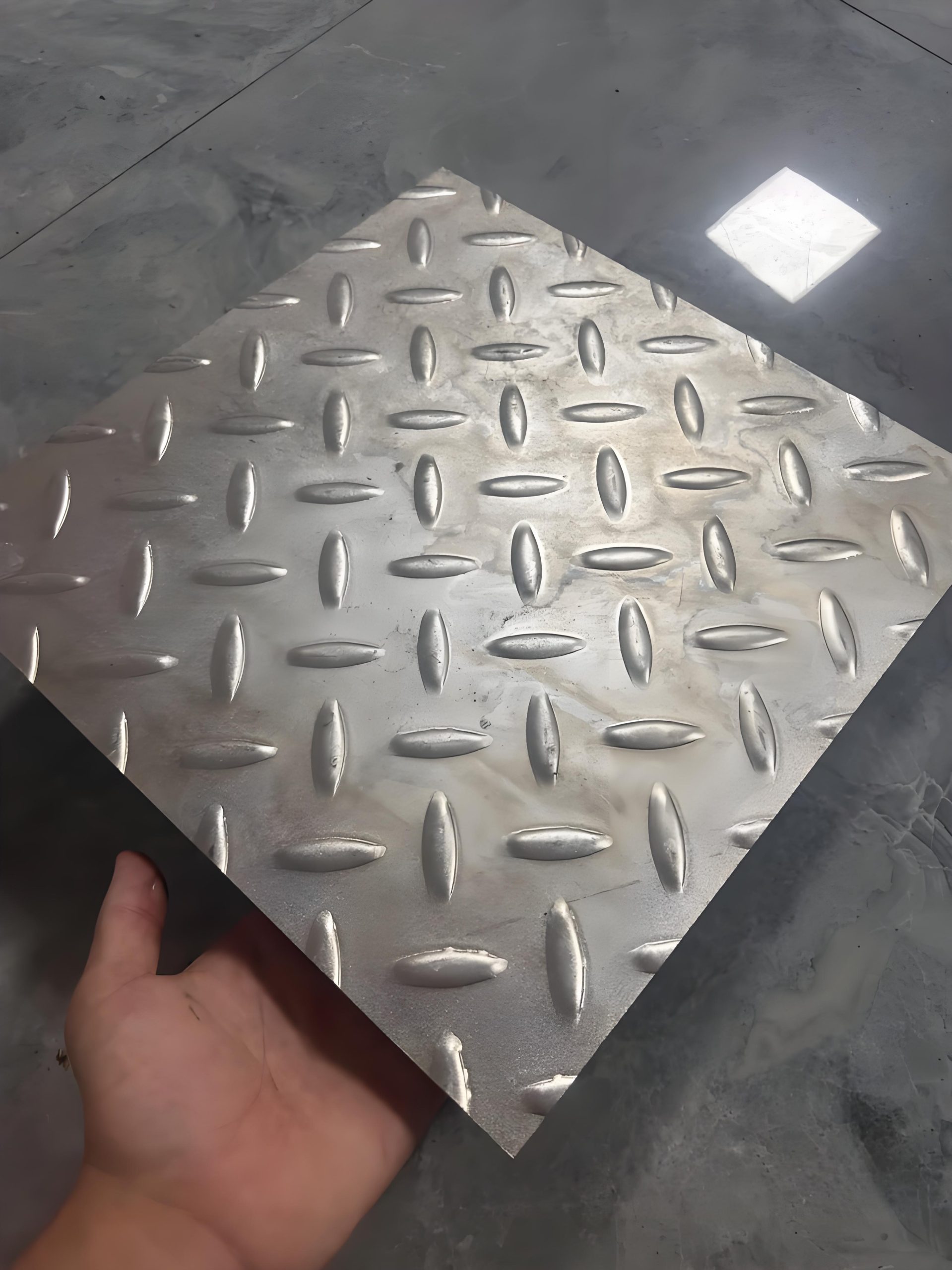
Orders of approximately 5–50 covers may still carry minimum material and production charges, particularly for 316L, thick plate, wedge wire, or special polishing.
Repeated dimensions and consistent specifications improve plate nesting, grating production, welding fixtures, surface treatment, and packing. This often provides a more competitive unit price.
Large orders may allow direct mill or service-center purchasing, longer production runs, better nesting, standardized frames, and efficient container loading.
The largest discount is normally available when the covers are identical or divided into a small number of repeated types. A project containing hundreds of unique panel marks may have a large total area but still require substantial engineering and fabrication labor.
| Order Characteristic | Expected Unit Price Effect |
|---|---|
| One custom prototype | Highest unit price |
| Small quantity with standard dimensions | Moderately high |
| Medium repeated production | More competitive |
| Large order with identical covers | Lower unit price |
| Large order with many unique drawings | Higher than an identical bulk order |
| Full-size panels without fabrication | Lower processing cost |
| Many frames, locks, and polished surfaces | Higher processing cost regardless of quantity |
The minimum order may be stated as a number of pieces, total square meters, total weight, or minimum order value. It should be confirmed separately for the cover, frame, surface finish, and packaging.
Basic domestic packing may use steel straps and simple supports. This can be adequate for short-distance factory collection but may not protect finished stainless surfaces during international transport.
Export covers may be packed on steel or treated wooden pallets with spacers, edge protection, waterproof wrapping, labels, and forklift access.
Frames and covers should be packed so that they do not bend, rub, or shift during transport. Locks, bolts, lifting keys, and installation hardware should be packed and labeled separately.
Brushed and polished stainless steel may require protective film, interleaving sheets, foam, or individual wrapping. The film must be suitable for transport and should not leave adhesive residue after prolonged exposure to heat or sunlight.
Stainless steel should be protected from direct contact with rusty steel straps, grinding debris, contaminated pallets, and carbon steel particles where surface cleanliness is critical.
Common documents include:
• Commercial invoice
• Packing list
• Bill of lading or airway bill
• Certificate of origin when required
• Material certificate
• Dimensional inspection report
• Surface-treatment record
• Load-test report when specified
• Product and packing photographs
Trench covers are relatively dense products. Shipping cost depends on gross weight, pallet size, destination, transport method, container utilization, and whether the shipment includes long channel bodies or only covers.
Air freight may be practical for small urgent samples but is normally expensive for thick stainless steel covers. Sea freight, rail, or truck transport is more economical for larger orders.
| Commercial Term | Normally Included | Common Exclusions |
|---|---|---|
| EXW | Finished and packed goods at the factory | Collection, export clearance, freight, duty, and tax |
| FOB | Factory production, inland transport, export clearance, and loading at the named port | Ocean freight, destination charges, duty, and tax |
| CIF | FOB scope plus ocean freight and specified insurance to the destination port | Most destination charges, duty, tax, and final delivery |
| DAP | Transport to the named destination | Import duty and tax unless otherwise stated |
| DDP | Delivery with agreed import obligations handled by the seller | Scope must be checked carefully for local unloading and installation |
A price comparison is incomplete unless all suppliers quote the same trade term, destination, packing level, and documentation scope.
The lowest numerical price is not necessarily the lowest cost for the required product. Buyers should compare the complete technical scope line by line.
| Comparison Item | Questions to Ask |
|---|---|
| Stainless grade | Is the material 304, 304L, 316, 316L, or an unspecified stainless grade? |
| Material standard | Is a recognized material specification and certificate included? |
| Plate thickness | Is the stated thickness nominal or measured, and does it exclude raised patterns? |
| Bearing bars | What are the exact depth, thickness, profile, and spacing? |
| Cross bars | What type and spacing are used? |
| Cover structure | Is it welded grating, press-locked, perforated, slotted, wedge wire, or solid plate? |
| Load capacity | Is it calculated, tested, or certified as part of a complete system? |
| Frame | Is the stainless steel supporting frame included? |
| Locks | Are bolts, locks, keys, hinges, or lifting devices included? |
| Surface finish | Is the cover mill finish, brushed, polished, pickled, passivated, or electropolished? |
| Edge treatment | Are burr removal, grinding, and banding included? |
| Quantity | Does the quoted price apply to the required order quantity? |
| Packing | Is export packing or only basic factory bundling included? |
| Delivery term | Is the quotation EXW, FOB, CIF, DAP, or DDP? |
A low-cost quotation may use 201 stainless steel while describing the product only as “stainless.” It may omit the frame, provide a thinner plate, use wider bearing bar spacing, exclude passivation, or claim a vehicle load without supporting calculations or testing.
The buyer should request a sectional drawing, material specification, finished weight, load information, and list of included accessories before placing an order.
A factory can provide a more reliable and faster quotation when the inquiry contains complete technical and commercial information.
| Required Information | Example |
|---|---|
| Application | Food-processing floor drainage or outdoor vehicle driveway |
| Cover type | Welded grating, perforated plate, slotted plate, or solid cover |
| Stainless grade | 304L or 316L |
| Material standard | ASTM A240/A240M or specified equivalent |
| Clear trench width | 300 mm |
| Cover size | 350 × 1,000 mm overall |
| Plate thickness | 4 mm |
| Bearing bar specification | 30 × 5 mm at 30 mm centers |
| Cross-bar spacing | 50 or 100 mm centers |
| Drainage opening | Maximum clear opening of 8 mm |
| Surface requirement | Brushed, anti-slip, pickled, and passivated |
| Load requirement | Pedestrian, trolley, passenger vehicle, forklift, or specified load class |
| Frame | Stainless steel angle frame with anchors |
| Locking system | Two captive stainless bolts per cover |
| Quantity | 250 identical pieces |
| Documents | Material certificate and dimensional inspection report |
| Packing | Export pallets with protective film |
| Delivery term | FOB named port or CIF named destination port |
For a vehicle-rated application, the inquiry should also include wheel load, tire contact area, vehicle type, traffic frequency, direction of travel, trench support detail, surrounding concrete design, and required test standard.
For hygienic drainage, the buyer should identify cleaning chemicals, water temperature, chloride concentration, required surface roughness where applicable, weld-finishing expectations, and whether pickling, passivation, or electropolishing is required.
How much does a 304 stainless steel trench cover cost?
A standard 304 stainless steel trench cover generally costs approximately US$40–220 per square meter at factory level, depending on whether it is a light slotted plate, perforated cover, or structural grating. Reinforced pedestrian and light-vehicle covers with frames commonly cost around US$150–450 per square meter. A small standard cover may cost approximately US$20–120 per piece, while a custom framed cover can cost several hundred dollars per piece.
Is a 316 stainless steel trench cover worth the higher price?
A 316 or 316L cover may justify its higher price in coastal, marine, chemical, wastewater, food-processing, and chloride-containing environments because its molybdenum content improves resistance to many forms of localized corrosion. In a dry indoor area with mild cleaning chemicals, 304 or 304L may provide adequate performance at a lower cost. The decision should be based on chemical exposure, chloride level, temperature, cleaning process, crevices, and expected service life.
What thickness should a stainless steel trench cover be?
There is no universal thickness because the required structure depends on the clear span, cover type, stainless grade, load, reinforcement, frame support, and allowable deflection. Light formed pedestrian covers may use material around 1.5–3 mm thick, while reinforced commercial covers commonly use 3–6 mm plate. Heavy vehicle covers may require thicker plate, deep bearing bars, structural reinforcement, and a tested frame assembly. Thickness should be selected through an applicable load table, engineering calculation, or verified system test rather than by cover width alone.
 English English
  Arabic
 Vietnamese
 German
 French
