
Hot-dip galvanized and painted steel grating can start with the same carbon steel panel, yet their protective finishes behave differently in service. Galvanizing covers the fabricated panel with zinc, which provides both a barrier and sacrificial protection at small exposed areas. Paint separates steel from moisture and contaminants as long as the coating system remains intact. For most exposed industrial walkways, platforms, stairs, and drainage covers, hot-dip galvanizing is a practical choice when its service environment is compatible with zinc. Paint is useful when color, a specified chemical-resistant coating system, or a controlled indoor finish is required. The right decision depends on exposure, fabrication sequence, traffic, appearance, repair access, and the cost of maintenance over the project life.
| Comparison | Hot-Dip Galvanized Grating | Painted Grating |
|---|---|---|
| Protection method | Zinc coating acts as a barrier and provides sacrificial protection | Coating film acts primarily as a barrier between steel and the environment |
| Typical application process | Completed steel panel is cleaned and immersed in molten zinc | Prepared panel receives primer and any specified intermediate or topcoats |
| Weld and edge coverage | Post-fabrication dipping can coat accessible welds and edges | Coverage depends on preparation and careful application, particularly at edges and recesses |
| Small scratches | Surrounding zinc can protect limited exposed steel | Exposed steel may rust unless the damaged film is repaired |
| Appearance | Metallic gray finish that changes as it weathers | Wide choice of colors, gloss levels, and specified finishes |
| Field repair | Damaged areas require an approved zinc repair method when they exceed the permitted limits | Damaged areas require cleaning, preparation, and compatible coating repair |
| Maintenance pattern | Inspect zinc condition, corrosion, damage, and wet deposits | Inspect film adhesion, scratches, edge rust, peeling, and coating breakdown |
| Best starting point | Many outdoor and general industrial installations | Color-critical or controlled indoor projects, or sites with a fully specified coating system |
These differences describe conventional hot-dip galvanizing and paint systems. Actual performance depends on steel preparation, coating quality, environmental conditions, handling, and maintenance. A thin shop primer should not be compared with a multi-coat industrial paint system as though they provide the same protection.
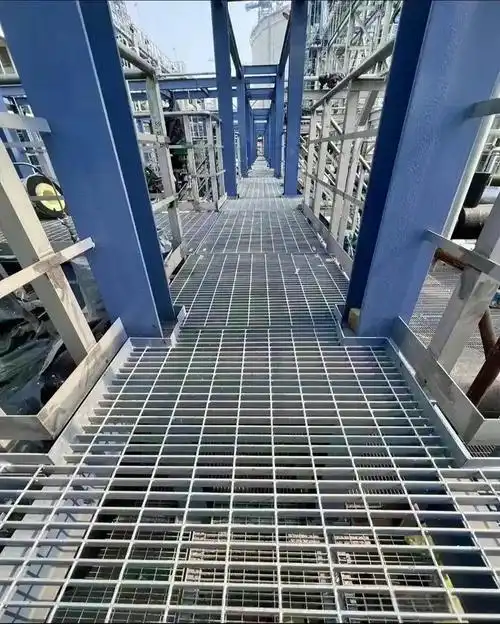
Hot-dip galvanized grating is carbon steel grating coated by immersion in molten zinc after the steel has been prepared. In a typical production sequence, bearing bars and cross bars are assembled, the panels are trimmed and banded, and the completed fabrication is cleaned before galvanizing.
The process forms a zinc coating metallurgically bonded to the steel. The finished surface includes zinc-iron alloy layers and an outer zinc-rich layer. Coating thickness and appearance vary with steel chemistry, section thickness, surface condition, dipping conditions, and drainage from the panel.
When grating is galvanized after welding, cutting, and banding, the zinc can protect accessible fabricated surfaces as well as the original bars. This matters because welds, cut ends, and banding connections are often exposed to water and contaminants in service.
Post-fabrication galvanizing still requires good detailing. Closely contacting surfaces, trapped air, poor drainage, and inaccessible gaps can prevent effective coating or create processing problems. The fabricator and galvanizer should review unusual assemblies before production.
Zinc first acts as a physical barrier. It also corrodes preferentially to the underlying carbon steel when a small area is exposed and an electrical path exists. This sacrificial action is valuable at minor scratches and handling marks, but it is not unlimited. Large bare areas, persistent abrasion, or an aggressive environment can consume zinc and expose the steel to rust.
New galvanized grating may be bright silver, matte gray, or visually varied. Spangle and shade can differ between panels. The surface usually develops a more uniform gray patina outdoors. Appearance variation alone does not establish whether the coating meets its specified thickness or quality requirements.
Painted grating is carbon steel grating protected with an organic coating system. Depending on the project, this may be a temporary shop primer, a primer and topcoat, or a multi-coat industrial system designed for a particular corrosive environment.
Paint performance depends heavily on preparation. Oil, mill scale, rust, salts, weld spatter, and sharp edges can prevent the coating from adhering or achieving adequate coverage. The preparation method, coating products, number of coats, dry-film thickness, curing, and inspection criteria should be specified before pricing.
A shop primer may protect steel during fabrication, storage, or transport before additional coating is applied. It should not be assumed to provide the same long-term outdoor protection as a complete industrial coating system. Ask whether the supplier’s “painted” price includes only primer or the full specified finish.
The specific coating chemistry should match the environment. A paint system suitable for a dry indoor platform may deteriorate quickly on a wet coastal walkway or in a chemical-processing area.
The zinc layer separates carbon steel from the atmosphere. If a small scratch exposes steel, nearby zinc can corrode preferentially and delay rusting at the exposed area. Over time, the zinc surface develops corrosion products that can slow further atmospheric attack under suitable conditions.
Service life depends on how quickly the local environment consumes zinc. Chlorides, industrial pollutants, prolonged wetness, acidic runoff, and abrasion can increase the rate of consumption.
A sound paint film limits contact between steel, water, oxygen, and other corrosive substances. Once a scratch, pinhole, weak edge, or coating defect exposes the substrate, rust can develop. Corrosion may spread beneath poorly adhered paint, leading to blistering or peeling.
A properly designed and maintained industrial coating can perform well for many years. Its protection depends on film continuity, adhesion, thickness, and timely repair.
Coating choice does not replace structural design. Load capacity still depends on bearing bar depth, thickness, spacing, clear span, steel grade, and support conditions. Zinc or paint should not be counted as load-bearing steel thickness in an ordinary grating selection.
A duplex system places a compatible paint system over hot-dip galvanizing. The zinc provides underlying protection while the paint adds a barrier and can deliver a specified color. Duplex systems can be valuable for demanding atmospheric exposure or architectural requirements.
They require proper preparation of the galvanized surface and coating compatibility. Applying paint directly to fresh zinc without the specified preparation can cause adhesion problems. The galvanizer, coating supplier, and fabricator should agree on the complete process.
Steel grating has a large exposed surface area and many intersections. Bearing bars, cross bars, welds, banding, serrations, and cutouts create locations that need particular attention during finishing and inspection.
Post-fabrication galvanizing can coat exposed welds and cut edges along with the panel. Weld quality and cleaning still matter: slag, spatter, oil, and other contamination should be removed before dipping.
Areas where two steel surfaces are pressed tightly together may not receive a reliable zinc coating inside the contact. Complex details should be designed to avoid inaccessible crevices or water traps.
Liquid coatings can pull away from sharp edges as they dry, leaving less film thickness there than on broad flat surfaces. Edge rounding, suitable preparation, and stripe coating may be required by the paint specification.
Expanded meshes and closely spaced bars create additional application challenges. A painter needs access and a method that coats the sides and underside, not only the visible walking surface.
Notches increase the number of edges and recesses on a panel. They can improve traction but may complicate painting and inspection. For galvanized serrated grating, the galvanizer must control coating build-up that could leave sharp projections or affect the intended surface.
The underside of a grating panel may remain wet longer than its walking surface. Clips and support ledges can trap deposits and create difficult-to-inspect contact points. Specify coating and maintenance access for the entire panel, including areas that are not visible after installation.
| Environment | Hot-Dip Galvanized Grating | Painted Grating | Selection Consideration |
|---|---|---|---|
| Dry indoor facility | Provides durable protection, though it may exceed the corrosion need | Can perform well with a suitable system; color may be useful | Compare appearance, traffic, cleaning, and future exposure |
| General outdoor platform | Common and practical starting choice | Can perform well when preparation and maintenance are controlled | Include access and cost for future coating repair |
| Coastal atmosphere | Zinc can protect steel, but salt increases coating consumption | Requires a system designed for salt exposure and careful edge maintenance | Consider a duplex system or a suitable stainless grade where warranted |
| Industrial atmosphere | Performance depends on pollutants and wetness | Performance depends on the coating chemistry and film condition | Identify actual emissions, deposits, and cleaning conditions |
| Frequent freshwater washdown | May be suitable with drainage and inspection | Requires a coating rated for repeated wetting | Check cleaners and water retained at supports |
| Acidic or strongly alkaline process area | Zinc may be consumed rapidly | A chemically compatible coating may be possible | Review the actual chemicals and consider another material if needed |
| Immersion or persistent standing liquid | Requires an exposure-specific assessment | Requires a coating specifically rated for immersion | Do not extrapolate from ordinary atmospheric performance |
Painted grating is often selected indoors when a consistent color is required or corrosion exposure is limited. It may be used to identify walkways, equipment zones, or architectural features. Galvanized grating may still provide a lower-maintenance option in humid rooms or areas subject to occasional washdown.
For exposed walkways and stairs, galvanizing offers broad coverage of fabricated steel and useful protection at small scratches. A paint system can also work, but the project should allow for surface preparation and future repairs, including access to the underside.
Salt deposits and repeated wetting can accelerate zinc consumption and promote corrosion at defects in paint. The severity varies with distance from the sea, wind direction, shelter, rainfall, and cleaning frequency.
Galvanizing, a suitable industrial paint system, a duplex finish, or stainless steel may each be appropriate for different coastal zones. Continuous seawater immersion is a separate and more demanding exposure than coastal air.
Process chemicals, acidic condensate, cleaning solutions, and biological deposits can be more important than general outdoor weather. Identify the substances, concentrations, temperatures, and exposure frequency before specifying zinc or paint. In some areas, neither finish on carbon steel will provide the desired service life, and a suitable stainless steel or another grating material should be evaluated.
Galvanizing can protect a small exposed area through the surrounding zinc, provided sufficient zinc remains and service conditions permit sacrificial action. This does not make deliberate coating damage acceptable. Large bare areas and deep abrasion require inspection and appropriate repair.
Paint protects effectively while the film remains continuous. Scratches that reach steel should be repaired according to the coating procedure, particularly in wet or salty environments.
Boots, tools, and dragged equipment can wear either finish. Contact occurs mainly along the top edges of bearing bars, making these areas important inspection points. Finish selection should reflect traffic intensity and whether panels can be accessed for maintenance.
Vehicle wheels can cause coating wear, impact, and panel movement. Coating durability should be assessed separately from structural capacity. A heavy-duty grating panel can be correctly designed for wheel loads while its surface finish still needs periodic repair.
For traffic applications, verify the panel, frame, bearing, and fasteners against the actual wheel loads. A change in finish cannot turn a pedestrian panel into a vehicle-rated cover.
Cutting, drilling, welding, and grinding can damage both finishes. Galvanized surfaces need an approved zinc repair method where required. Painted surfaces need the specified preparation, primer, and topcoat repair. Plan these activities before site work begins so exposed areas are not left untreated.
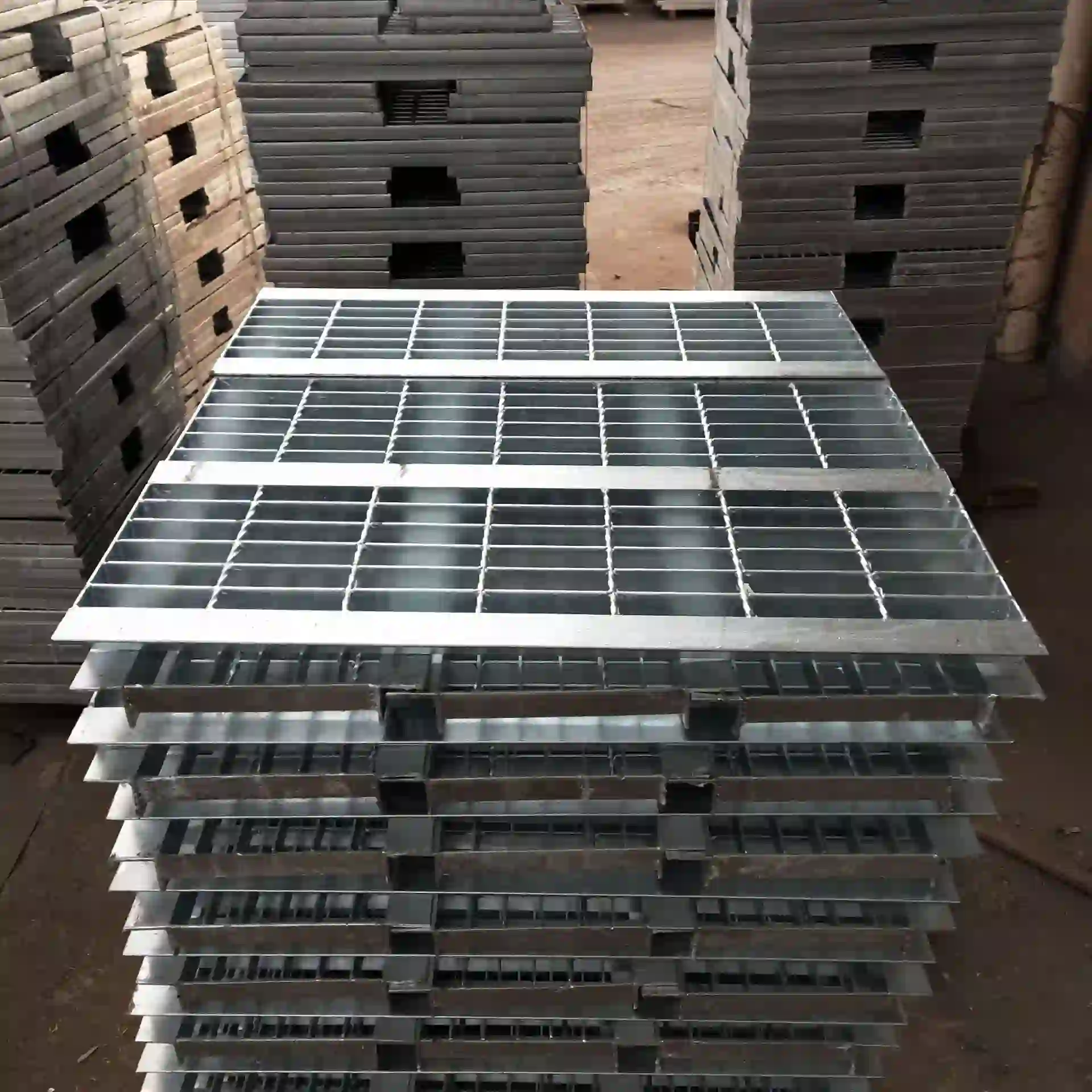
Hot-dip galvanizing has a metallic finish that may show differences in brightness, texture, or spangle. It weathers toward gray. It is generally specified for protection rather than a perfectly uniform decorative appearance.
Runs, sharp projections, blocked openings, and other defects that affect function or safety should be assessed against the coating and product acceptance requirements. Normal color variation should not be confused with inadequate coating.
Paint offers a wide choice of colors and gloss levels. This can help match building finishes or identify designated access areas. Color can also make panel edges and stair components easier to see, although paint should not replace proper lighting or edge marking.
A uniform visual finish may require additional surface preparation, coating passes, and handling controls. Ask the supplier which faces will be finished to the specified appearance standard.
Where both a specified color and zinc protection are required, a duplex system may be considered. The quotation should include galvanizing, preparation of the zinc surface, compatible paint, inspection, and a coordinated repair procedure.
Either finish can be used on plain or serrated grating when the production and coating process supports it. The walking-surface profile should be selected from the slip conditions. Coating should not blunt a serration or leave hazardous sharp build-up.
Where practical, cut panels to size, add banding, form openings, drill holes, and weld attachments before galvanizing or final painting. Finishing a panel and then making extensive alterations creates exposed edges and repeat repair work.
The assembly should allow molten zinc and process fluids to enter, drain, and leave safely. Large or unusual panels must fit the galvanizing facility’s equipment. Closely spaced elements can retain zinc or obstruct drainage, so the galvanizer should review complex details.
Hot-dip galvanizing can introduce dimensional changes or distortion in some welded assemblies. Specify flatness and fit requirements, and confirm whether a tightly fitting panel needs a trial or additional allowance.
Paint must reach the sides, intersections, undersides, and edges of the grating. Closely spaced bars can make spray application and thickness inspection difficult. The painter should have a suitable method for access, turning, curing, and handling the panels.
Clips and bolts should be compatible with the panel finish and exposure. Galvanized panels often use galvanized or otherwise compatible fasteners. Painted panels may need separate fastener coating or touch-up after installation.
Water trapped between grating and support steel can accelerate corrosion. Level supports, adequate drainage, and accessible fixing details improve performance for both finishes.
Welding a finished panel burns away galvanizing or paint near the weld. Follow the site’s hot-work controls and repair the affected area using the project-approved method. A bolted or clipped connection may reduce field finishing work where it meets the restraint requirement.
White deposits can appear on zinc, particularly when newly galvanized panels are stored wet without airflow. Their significance depends on extent and coating condition. Storage, cleaning, and acceptance should follow the project and galvanizer’s procedures.
Repair methods may include zinc-rich paint, zinc-based solder, or zinc spraying where permitted by the governing specification. The acceptable damaged-area limits and repair method should be agreed before delivery. For projects using ASTM standards, ASTM A780/A780M addresses repair of damaged and uncoated hot-dip galvanized areas; other regions may use different requirements.
Paint repair usually involves removing loose coating and corrosion, preparing the steel, then applying compatible primer and finishing coats to the specified thickness. The repair should blend into a sound surrounding coating and meet the coating supplier’s instructions.
Remove leaves, dirt, salt, chemical residues, and grease that retain moisture. Cleaning agents must be compatible with zinc or the specified paint. A harsh cleaner can shorten finish life even when the grating is otherwise correctly specified.
Initial price depends on the steel section, panel size, fabrication, finish specification, order quantity, and supplier. Galvanizing and painting cannot be compared fairly using finish names alone.
A quote for a standard galvanized panel may be lower or higher than a quote for a lightly primed panel. A fully prepared, multi-coat industrial paint system may cost more than galvanizing. Special colors, small quantities, inspection, and handling can change the result.
| Cost Element | Hot-Dip Galvanized Grating | Painted Grating |
|---|---|---|
| Initial finishing | Depends on weight, batch size, dimensions, and galvanizer requirements | Depends on preparation, coating products, number of coats, and inspection |
| Color requirement | Metallic zinc appearance unless painted afterward | Color included in a specified topcoat system |
| Small handling damage | Zinc may provide some local sacrificial protection | Damage exposing steel generally needs prompt coating repair |
| Routine maintenance | Cleaning and inspection; repair where coating loss requires it | Cleaning, inspection, and periodic repair or recoating as needed |
| Major future work | Panel replacement or refurbishment when zinc protection is depleted | Surface preparation and repainting may extend service if the steel remains sound |
| Access cost | Can be significant for either finish on elevated or operating structures | Can be significant where repainting requires isolation or scaffolding |
Ask suppliers to separate grating fabrication from finishing cost and identify what preparation and inspection are included. A low painted-panel price may include only a transport primer. A low galvanized-panel price may exclude custom fabrication or coating repair after field cutting.
A finish requiring repair every few years may be acceptable on ground-level removable panels. The same repair schedule can be costly on an elevated platform above operating equipment. Include access equipment, safety controls, downtime, and labor in the life-cycle comparison.
Compare purchase, installation, inspection, cleaning, repairs, possible recoating, and replacement over the same project period. Do not assume either finish has one fixed life in every environment.
For broader material and project pricing context, see the CSSP guide to steel grating prices, sizes, and load capacity. A project quotation should still be based on its exact section, finish, and delivery scope.
Service life is governed by the local exposure and the quality of the entire finishing process. Identical panels can perform very differently when one is dry and well ventilated while another retains salty water under deposits.
Humidity, time of wetness, salt deposition, industrial pollutants, and rainfall affect coating life. Sheltered areas may retain contaminants because they do not receive natural rinsing.
Zinc is vulnerable to certain acidic and strongly alkaline conditions. Paint systems also have chemical limits. Request compatibility information for the actual substances, concentrations, and temperatures instead of selecting from a broad industry label.
Good drainage reduces persistent moisture at panel joints, banding, clips, and supports. Crevices and horizontal pockets can shorten the useful life of either finish.
Repeated foot traffic, carts, vehicles, dragged equipment, and abrasive debris can wear the protective layer. Identify high-wear routes when planning inspection and repair.
Incomplete surface preparation, poor coating coverage, damaged panels, untreated field cuts, and unsuitable fasteners can cause early corrosion. These risks are controllable through clear specifications and inspection.
Periodic cleaning and timely repair prevent small defects from becoming larger problems. Service-life estimates should be tied to a realistic maintenance plan, particularly in coastal and industrial atmospheres.
For severe immersion, aggressive chemicals, or environments incompatible with both zinc and the proposed paint, evaluate a suitable stainless steel grade or another grating material. Verify structural performance and chemical compatibility before substitution.
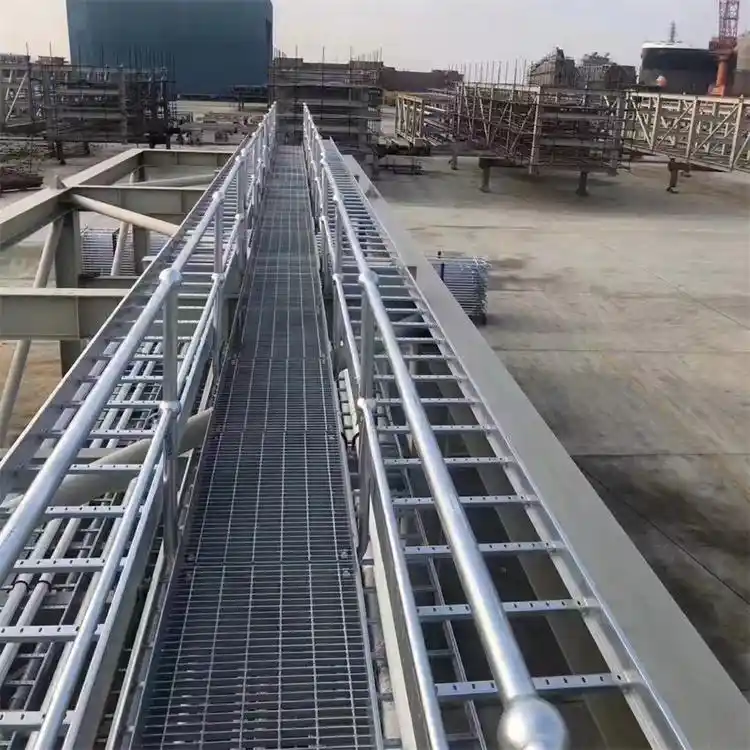
Record whether the grating will be indoors, outdoors, coastal, immersed, or frequently washed. List chemicals, salts, cleaning agents, temperature, abrasion, and how often the surface stays wet.
Specify bearing bar dimensions, spacing, cross bars, clear span, design loads, and allowable deflection. The finish comparison should use the same structurally suitable panel.
If color or gloss is important, state the accepted shade, finish, and visible surfaces. If appearance is secondary, a standard galvanized finish may reduce finishing complexity in a suitable environment.
Show all panel sizes, banding, holes, cutouts, toe plates, and attachments before finishing. Ask whether the product can be galvanized as one complete assembly and whether painted recesses can be coated and inspected.
Identify the coating standard, acceptance criteria, permitted repairs, field-cut treatment, and records required at delivery. Include the underside and contact areas in the inspection scope where practical.
Compare fabrication, finishing, packing, freight, installation, cleaning, inspection, repairs, recoating, and replacement. Use the same study period and maintenance assumptions for each option.
| Project Priority | Starting Finish to Evaluate | Critical Check |
|---|---|---|
| General outdoor industrial service | Hot-dip galvanizing | Zinc compatibility with the site and drainage at supports |
| Specified color in a dry indoor area | Painted grating | Whether the quote includes a complete coating system or only primer |
| Outdoor color and corrosion protection | Duplex galvanizing and paint | Surface preparation, coating compatibility, and repair method |
| High abrasion from traffic | Compare finish systems on the approved heavy-duty panel | Top-edge wear and access for repairs |
| Acidic or strongly alkaline exposure | Exposure-specific paint system or alternative material | Documented chemical compatibility at the operating temperature |
| Coastal or salt-laden atmosphere | Galvanized, duplex, or suitable stainless steel | Salt deposition, wetness, coating access, and required service period |
Ask for separate prices for a galvanized option and a fully specified painted option when both can meet the project requirement. This reveals the actual finish cost and makes future maintenance obligations easier to compare.
Is hot-dip galvanized grating better than painted grating outdoors?
It is often a practical choice for general outdoor service because post-fabrication galvanizing can cover accessible welds and edges, and zinc provides sacrificial protection at small damaged areas. A properly specified paint system can also perform well outdoors, particularly where color or a particular chemical resistance is required. Compare the actual exposure, coating specification, repair access, and maintenance cost before choosing.
Can you paint over hot-dip galvanized grating?
Yes. A compatible paint system over galvanizing is called a duplex system. The zinc surface must be prepared for coating according to the specified process; painting directly over an unsuitable surface can lead to poor adhesion. Include galvanizing, preparation, paint application, inspection, and field repair in the quotation.
Which costs less, galvanized or painted steel grating?
There is no universal answer. A lightly primed panel may initially cost less than a galvanized panel, while a fully prepared multi-coat industrial paint system may cost more. Panel weight, order quantity, coating thickness, preparation, color, inspection, and delivery also affect price. Compare complete, equivalent systems and include future repair or recoating costs.
